
How we work.
Five stages, each with named deliverables and a point where you sign off before we continue. No stage begins until the previous one is agreed, so there are no surprises at the end.
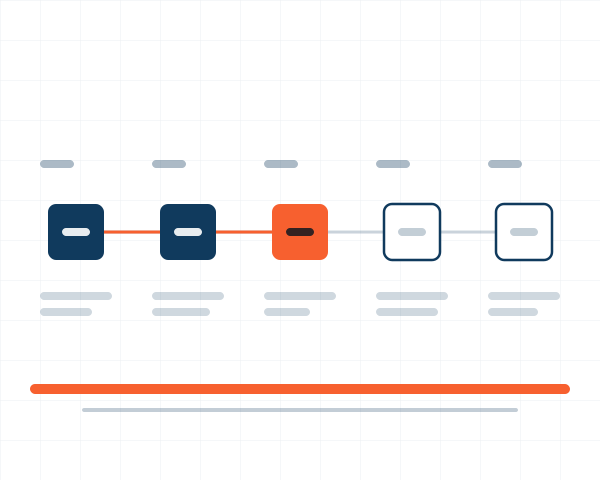
At a glance
The five stages.
Each one is described in full below.
-
Discover
Goals, users, constraints, and what is actually broken.
-
Design
Reviewed against accessibility and performance criteria first.
-
Build
Component-based, tested continuously, visible on staging.
-
Launch
Migration, redirects, monitoring, and a documented checklist.
-
Support
Patching, backups, monitoring and enhancements.
Stage 01
Discover
Before anyone writes code we find out what you actually need, which is not always what the brief says. We look at what you have, who uses it, and what is genuinely broken.
What it includes
- Goals, audiences and constraints, written down
- Audit of the current site or application, if there is one
- Accessibility and performance targets agreed as criteria, not aspirations
- Risks named early, including the ones that affect price
What you get: A written scope with a fixed price, and a plan you can hold us to.

Stage 02
Design
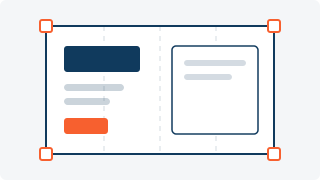
Interface design reviewed against the agreed criteria before development starts. Catching a contrast failure or an unreachable control in a design file costs minutes; catching it after launch costs a remediation project.
What it includes
- Layouts for the breakpoints that matter, not just desktop
- Colour and type checked for contrast at design stage
- Interaction states defined: hover, focus, error, empty, loading
- A component inventory so the build has a vocabulary
What you get: Designs you have signed off, and a component list the build follows.
Stage 03
Build
Component-based development with accessibility and performance tested continuously rather than saved for a pass at the end. Work goes to a staging URL you can see from the first week.
What it includes
- Hand-written, semantic markup, not page-builder output
- Keyboard and screen reader testing at each merge
- Performance measured against the agreed budget as we go
- Staging environment you can review at any point
What you get: Working software you have watched take shape, not a reveal at the end.
Stage 04
Launch
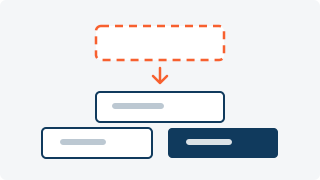
The unglamorous part that decides whether a good build survives contact with the real world. Nothing goes live off a checklist we invented that morning.
What it includes
- Content migration and a redirect map for every retired URL
- Analytics, monitoring and backups configured before go-live
- A final conformance and performance pass against the agreed criteria
- A documented rollback, in case it is needed
What you get: A launch checklist you can read, and the test evidence behind the sign-off.

Stage 05
Support
Most agencies stop here. Software decays: dependencies age, platforms change, content drifts. A site nobody maintains becomes a liability within about eighteen months.
What it includes
- Uptime monitoring and alerting
- Core and dependency patching on a schedule
- Backups with restores actually tested, not just taken
- Written response and resolution targets, reported monthly
What you get: A site that still works in two years, and someone who knows why it was built that way.

Tell us what stage you are at.
Some clients arrive at discovery with nothing built, others mid-project with something that is not working. Both are fine.
Throughout
What holds at every stage.
These are not stage-specific. They apply from the first conversation to the last support ticket.
- You see work in progress A staging URL from the first week. No reveal at the end, no discovering in month three that we understood the brief differently.
- Criteria, not opinions Accessibility and performance targets are agreed up front and measured, so "is it good enough" has an answer rather than a debate.
- One team throughout The people who scoped the work build it. Nothing is handed to someone junior once the contract is signed.
- Everything is yours Code, content, domains and hosting. You can take it elsewhere at any point, and we will help you move it.
Tell us what stage you are at.
Some clients come to us at discovery with nothing built. Others arrive mid-project with something that is not working. Both are fine. Say where you are and we will tell you what we would do next.